
What size flight crate does your pet need?
A crate that is even slightly too small is one of the most common reasons a pet is turned away at check-in. Here is the exact IATA method to size it right — plus a calculator that does the maths for you. And if you would rather not guess, we measure your pet and source the correct crate as part of the move.
Measure your pet in four steps
With your pet standing naturally on all four legs, take these four measurements. They feed straight into the calculator below.
Body length
Nose tip to the base of the tail.
Height to elbow
Ground up to the elbow joint.
Shoulder width
Across the widest part of the shoulders.
Standing height
Ground to the top of the head or ear tip — whichever is higher.
Find your pet's IATA crate size
Enter the four measurements. We apply the official IATA Container Requirement 1 formula and match it to a standard crate series.
Your pet
Measure with your pet standing naturally.
Minimum crate
Internal dimensions — the crate must be at least this big.
- Stands fully upright — head and ears clear of the roof
- Can turn around comfortably
- Can lie down naturally with legs extended
This is the minimum. A little larger is fine; oversized can be rejected, as a pet slides during turbulence. Aim for the smallest standard size that fits. We size and source the exact crate for you →
Standard crate sizes, 100 to 700
Airlines accept rigid crates sold in a standard series. The calculator gives the interior your pet needs; crates are sold by their larger exterior size — both are below, so there is no guesswork.
Swipe to compare →
| Series | Interior L × W × H (cm) your pet must fit this |
Sold as (exterior) | Rough weight* | Typical breeds |
|---|---|---|---|---|
| 100Small | 48 × 34 × 37 | 21″ · 53 × 41 × 38 | up to ~7 kg | Cats, Chihuahua, Yorkie, toy breeds |
| 200Medium | 62 × 46 × 50 | 28″ · 71 × 52 × 55 | ~7–13 kg | Shih Tzu, small terriers, Pug† · min size for cats |
| 300Inter. | 75 × 50 × 60 | 32″ · 81 × 57 × 61 | ~13–22 kg | Beagle, Cocker Spaniel, French Bulldog† |
| 400Large | 83 × 56 × 66 | 36″ · 91 × 64 × 69 | ~22–31 kg | Border Collie, Corgi, Bulldog† |
| 500XL | 92 × 63 × 73 | 40″ · 102 × 69 × 76 | ~31–41 kg | Labrador, Golden Retriever, Boxer† |
| 700Giant | 112 × 74 × 83 | 48″ · 122 × 81 × 89 | ~41 kg+ | German Shepherd, Great Dane, Rottweiler, Husky |
* Weight is a rough guide only — always size by measurement, not weight. † Snub-nosed: size up. Some brands add a 550 / 600 "Large XL" to bridge 500 and 700. Figures are Petmate Sky Kennel (the line airlines reference); interior varies slightly by brand, so confirm the actual product against your calculated minimums.
What makes a crate IATA-compliant
Size is half of it. The crate also has to be built to carry your pet safely in the hold.
Rigid build
Hard plastic, fibreglass, metal or solid wood. Never all-mesh or collapsible.
Four-side ventilation
Openings on all four sides for international travel, in the upper two-thirds.
Secure metal door
A full end that locks with metal pins. We add cable ties for extra hold.
Leak-proof floor
Solid base lined with absorbent bedding to keep your pet dry.
Outside-fill water bowl
Fixed inside, fillable from outside without opening the door.
Spacer bars
Rims on the sides keep airflow clear when crates are loaded together.
Correct labels
"Live Animal" and upright arrows, placed so they never block a vent.
Two-piece ID
Your pet's details and your contact, fixed to the crate.
There is no such thing as an "IATA-certified" crate
IATA sets the standard; it does not certify products, and listings that claim "official IATA certification" are misleading. Any rigid crate that meets this spec is accepted — we make sure yours does, and confirm it against your airline before travel.
Flat-faced breeds need a closer look
These breeds have shortened airways and overheat more easily, so airlines treat them with extra caution.
- +Size the crate 10% larger than the formula gives, for more airflow.
- +Many airlines restrict or refuse them in the hold, especially in hot months.
- +Hot-season travel is often not recommended — timing and routing matter.
Whether a flat-faced pet can fly — and on which airline — depends on the carrier, the season and the route. That is exactly the kind of thing we plan around.
See the full airline-by-airline rules in our breed & airline restrictions guide →
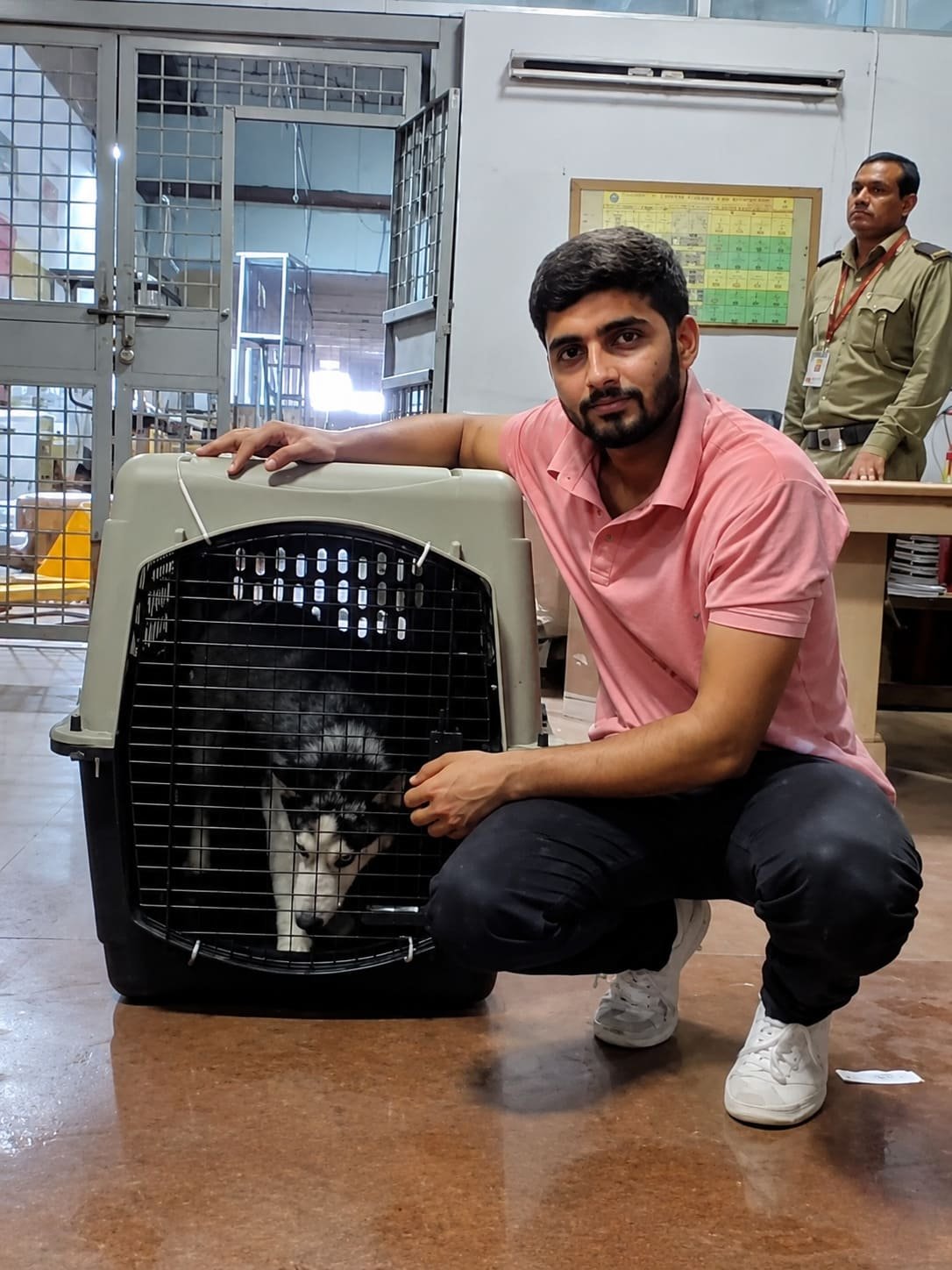
You do not have to get this right alone
Sizing, sourcing and prepping the crate is one of the most fiddly parts of a move. It is also one we take off your plate entirely.
- We measure your pet and calculate the right size
- We source a crate that meets the full IATA spec
- We help acclimatise your pet so the crate feels safe
- We label, prep and confirm it with your airline
Crate mistakes to avoid
Sizing by weight
Two dogs of the same weight can need different crates. Always size by measurement.
Chasing "IATA-certified" listings
No such certificate exists. Buy a crate that meets the actual spec.
Going too big
An oversized crate lets a pet slide in turbulence and may be rejected.
Going too small
If the head touches the roof or it cannot turn, it is refused at check-in.
Weak doors or labels over vents
Plastic clips alone, or stickers blocking airflow, fail inspection.
Leaving crate-training late
A pet that has never seen the crate travels stressed. Start weeks ahead.
Crate sizing FAQ
Can my pet travel in a soft carrier in the hold?
Is a bigger crate always safer?
Why do snub-nosed breeds need 10 percent more?
Is the cabin crate different from the cargo crate?
Can two pets share one crate?
Is there really no IATA certified crate?
Do you provide the crate?
Not sure which crate your pet needs?
We will measure, size and source the right IATA crate — and handle the whole move from your door to theirs.